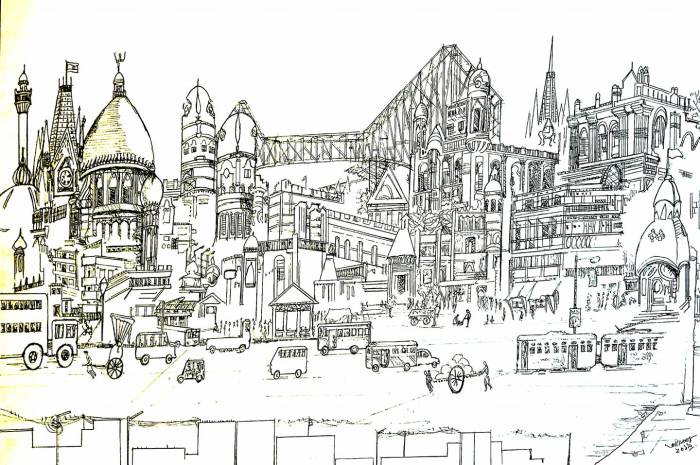
When you visit Calcutta , you see not one city but many, of equal size and not unlike one another but at different times.
Once you get to Manicktala and then towards Shyambazar or maybe towards Esplanade and then on to Gariahat, you see the city repeats its life, identical, shifting up and down on its chess board. The inhabitants repeat the same scenes, which their earlier generation had enacted, they repeat the same speeches with variously combined accents; they open alternate mouths in identical yawns. The city always remains the same. Each area seems to be one sub-city, made of its paras and pavements and parapets. Every time you enter one of the cities, within Calcutta, you find yourself caught in a dialogue.
The parasite coming from a door to meet the young squanderer, the miserly father from his parapet utters his final warnings to the local unemployed youth for denial of subscription for puja, interrupted by the foolish servant who is going to buy mustard for boudimoni. You return to the city after a gap of some years and you find the same dialogue going on; in the meantime the parasite has died, and so have the miserly father; but new beings have taken their places and being replaced by a new hypocrite, a new miser, a new hustler.
The participants in the dialogue die one by one and meanwhile those who will take their roles are born, some in one role and some in another. When one changes role with age, they get added by others who have likewise transformed themselves. There is a series of changes, until all the roles have been reassigned; but meanwhile the angry old father goes on replying to the witty maidservant, the hustler never ceases to follow the disinherited youth , Horipada goes to the bazaar at 7 am everyday. The narrative style of the city continues, not growing, but continues to attract. Like a TV set which refuses to get switched off.
It’s a story continues of prose and passion. Of poetry and phuchka. Of people and dialogues. And thankfully of no prejudices.