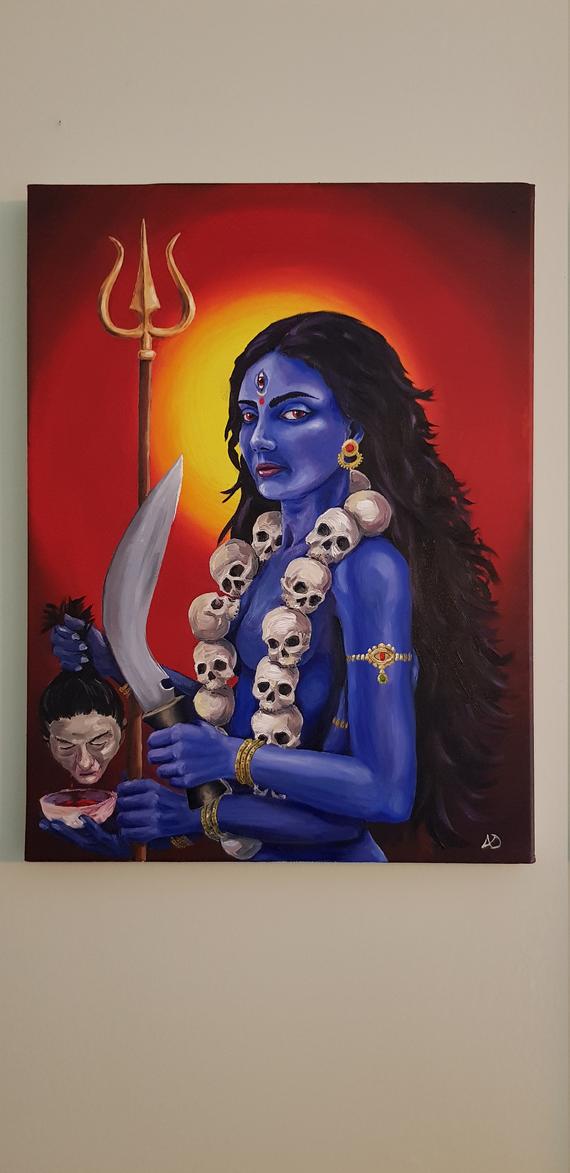
Durga is the goddess of protection and progression; Kali is the goddess of destruction, born from Durga’s forehead.
Being the cosmic energy and element behind creation, Kali took no colour and remained black. She remained naked but on finding cosmic consciousness in the form of Shiva, she stuck out her tongue, remembering that even omnipotence is just an essential property of the ultimate Absolute. Kali Puja is celebrated on amavasya, no moon night, coinciding with Diwali, the festival of light. Diwali signifies inner and outer illumination. It marks the day of the return of Rama after defeating Ravana, a symbol of evil.
Also associated with Goddess Lakshmi as she emerged from the sea — according to the mythical tale of the ‘samudra manthan’. The celebration commemorates Rama’s final return home from exile and welcome with a glittering row of lights radiating from every household. It also coincides with the Pandavas’ return from the forest.
Kali Puja was practically unknown before the 18th century; however, a late 17th-century devotional text Kalika Mangalkavya –by Balram mentions an annual festival dedicated to Kali. It was introduced in Bengal during the 18th century, by Raja Krishnachandra of Nabadwip.